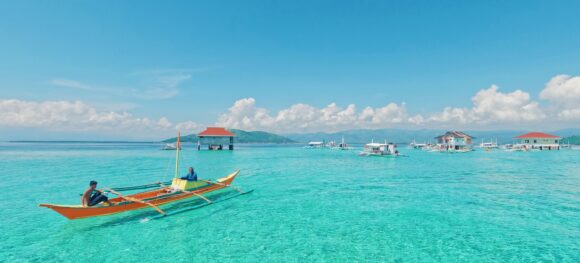

April 16, 2022. One of the highlights of my family’s vacation was a trip to Bais and the Manjuyod sand bar around the center of Negros Oriental province. The resort we stayed in gladly arranged for us a whole day trip to these destinations where we chased and watched dolphins in the sea and had amazing lunch in the middle of a submerged sand bar.

The trip to Bais City from our resort in Dauin took us almost two hours northward from Dumaguete. The van took us directly to Canibol Wharf where a large banca was waiting for us to bring us to Tañon strait, the body of water that separates Negros Island from Cebu.


At this time of the year, with ideal current and wind conditions, visitors will encounter immaculately calm waters, almost perfectly still and glass-like at certain parts of the sea. A large section of this area is a protected marine seascape. Some Filipino lawyers and law students might be familiar with ‘Tañon Strait’ as it hosts ‘the resident marine mammals’ who were found by the Supreme Court to have legal standing to be represented and have in fact claimed protection under the laws of the country.

April 14-17, 2022. The first part of my trip was devoted to spending quality time with my family, celebrating my mom and my brother’s birthdays staying in a proper luxury boutique resort in Dauin, a town south of Dumaguete, and doing day tours in provincial capital and its surrounding towns of Valencia, Bais and Manjuyod.
How we got there
It takes just above an hour by plane from Manila to get to Dumaguete, the capital of the province, and the gateway to all the other places in this part of Central Visayas. From the airport, we had a pre-booked van in order to go to the resort in Dauin, a dozen or so kilometers to the south of Dumaguete.
What we did
For our first day, a friend of my mom’s friend toured us around some parts of Dumaguete. After stopping by a the Catholic church in the center of the city, we went to Valencia to drive around some of the mountain attractions. We made several stops including one at a road side where sulfur steams out from the ground.


A little more than a month before I officially assume my role as Foreign Service Officer with the Department of Foreign Affairs, I decided to go on a 15-day sojourn to places in Central Visayas that I have not been to before: Dumaguete and its neighboring towns in Negros Oriental; Moalboal in southern Cebu; and the island province of Siquijor.
It was sort of my way of reviving a type of eagerness for the country I am now duty-bound to serve. Something like going on a trip with someone you love to rekindle a love affair that has staled for a while, I wanted to experience a renewed passion with the Philippines by seeing more of it, especially of those places I’ve never visited before. Also, of course, I just simply love traveling, and a half-month backpacking trip before I start work, where I might never be able to do extended holidays anymore, sounded like a good idea.
This trip began with a proper vacation with my family during Holy Week break in a luxury resort in Dauin in Negros Oriental, a town a few kilometers south of Dumaguete known for its exceptional diving and diving resorts. None of us in my family were scuba divers, however, but it did not mean we did not have a fantastic time. It was also a celebration for my mom and my brother’s birthdays. During this trip we also had the chance to see dolphins swimming in the wild, gliding through the calm waters of Bais, and spend some time at the Manjuyod sand bar.
The week after, I stayed behind while my family flew back to Manila. I then began my trip to Moalboal in southern Cebu, with the objective of learning scuba diving in order to get a license and earn certification as an open water scuba diver.
The week after was spent in Siquijor, an island province in Central Visayas known in my generation and those preceding mine for its mystical folklore, but is nowadays renowned for being a young millennial backpacker’s paradise and now forms part of the backpacking circuit in the Philippines many Western backpackers now undertake.
I eventually find myself back in Dumaguete for the final days of my trip where I catch up with friends from law school who have made this part of the country their new home.
Note: This is a re-composed version of a series of tweets posted on the same date.
I have decided not to pursue pending job applications in Paris in order to take on my forthcoming appointment with the Philippines’ Department of Foreign Affairs. This also means I have decided to forego my chance for naturalization in France. Although many of you might think I am making a mistake, at the moment this is what feels right for me.
The two years I spent in France were among the best in my life and the prospect of re-doing my life, low-key and without a care in the world, with all the perks of ‘first world’ citizenship, far from all my profound frustrations in the Philippines was (and still is) so very appealing.
However, I realize that I want a deeper sense of purpose. A low-key private life as a citizen in Europe is a dream! But I also pine for sense of relevance in this world and all that’s happening. In the end, the question that lingered throughout my thought process was–what am I here for? The unique chance to be diplomat excites me. The pieces didn’t fall into place for me to ignore.
Note: This is a re-composed version of a series of tweets posted on the same date. It garnered quite some controversy after it was republished in a website without consent. But I’m nevertheless posting it here for posterity.
This year I have the choice to either enter the Philippine foreign service or start an application for French naturalization, since I technically become eligible this June. Divergent and significant life choices ahead, and the temptation is strong. The election results might play a significant role in my decision.
If you’re wondering how I am eligible so soon–the five (5) year residency requirement for an application for French citizenship is shortened to two (2) years after obtaining a masters degree from a French university. Well, that aside from other conditions of course, but at least I get to tick one major requirement this year. I can theoretically start the application this June because that would have been two years since I graduated from my first masters degree in Paris.
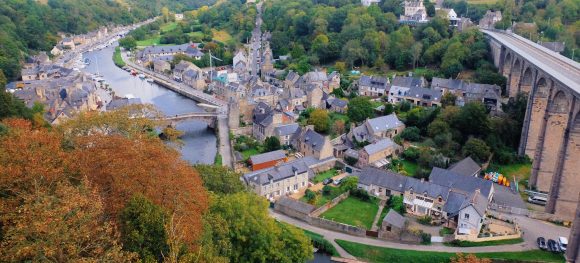
September 21-27, 2020. This is the first week that I didn’t have to rush every morning to get to Alliance Française for my daily four-hour language classes. I had intentionally not enrolled in the last week of the B1-level program because I wanted at least a week for some rest before my LL.M. (Master of Laws) international arbitration program commenced.
To make most of the free time, I had previously decided to take a leisure trip. The original destination I had in mind was Hamburg, to visit a good friend. But a month or so ago, Germany introduced stricter measures for all persons entering from France, which meant it was too cumbersome to make a visit. I would have had to isolate myself for two weeks upon arriving and that would have been too much trouble. Also, of course, if I only had a week to spare, there wouldn’t have been enough time to complete the two-week quarantine.
Thus, I decided to go somewhere within France instead, where there were no travel restrictions. Some weeks ago, the French domestic train network went on promotion to sell tickets at a bargain. Tickets were selling for as low as 10 euros one-way to select destinations. I was able to book roundtrip train tickets to Marseille and Rennes.
But before I get to that, let me tell you about my trip to the prefecture (administrative / police office) at the beginning of the week to submit my foreign resident visa requirements and finally being granted a “récépissé” or preliminary resident permit.
Finally getting my récépissé. I have probably recounted before that getting a rendez-vous (appointment) with the prefecture, which is the office that handles the renewal of resident visas for foreigners in France, was such a pain. Well, first you have to know that because of the pandemic, you can’t just show up at the prefecture without booking an appointment. Next, you have to know that booking an appointment at the prefecture’s website is such a game of luck. The slots only open on Mondays at around 9AM. I say “around” because it’s not precise. You just have to keep refreshing the webpage starting at 9AM until the slots appear and then fill up the forms as fast as you can, before the very few slots available run out. To cut the long story short, I was able to book a rendez-vous two weeks ago, scheduled for this Monday, September 21. By this date, my existing resident visa had already expired. But I was told I need not worry because holders of recently expired resident visas are given consideration because of the pandemic.
The prefecture in charge of handling applications from my place of residence is located in Antony, a suburb around 12 kilometers from the center of Paris, or around an hour by train from my place in Boulogne.
I had previously encountered an irritable female officer to handle my request the last time I had an appointment three weeks ago who quite literally just told me to go away and book another appointment because my documents were not in order. I had hoped I would not encounter her again but behold me, there she was.
I faced the challenge head on. As usual, she was in an unpleasant disposition and refused to show any sign of consideration even if I was clearly struggling with communicating. She spoke fast French all throughout but thanks to weeks of French classes, I knew better (but not perfectly) how to respond to her questions and demands. I wonder how non-French speakers have to deal with this unpleasant French bureaucracy! Anyway, after a few minutes of checking my documents, she finally provided me a récépissé or a temporary resident visa that would allow me to stay in France while they prepare my carte de séjour or foreign resident identification card.


I was so relieved upon receiving the resident visa. Because it was a very pleasant day, I took a walk inside the vast Parc Sceaux which was just nearby. I didn’t realize how beautiful the park was. I spent a little more than an hour just sitting under the shade of a tree reading a book (in French, as a means of practicing my reading comprehension). I also took a stroll around the quaint town center of Sceaux until later in the afternoon. I did some groceries, too, because I had thought of trying to make fried rice and other meals for the next few days.